Connecting You with Real-Time Crypto Insights, Showcasing News and the Vibrant World of Cryptocurrencies

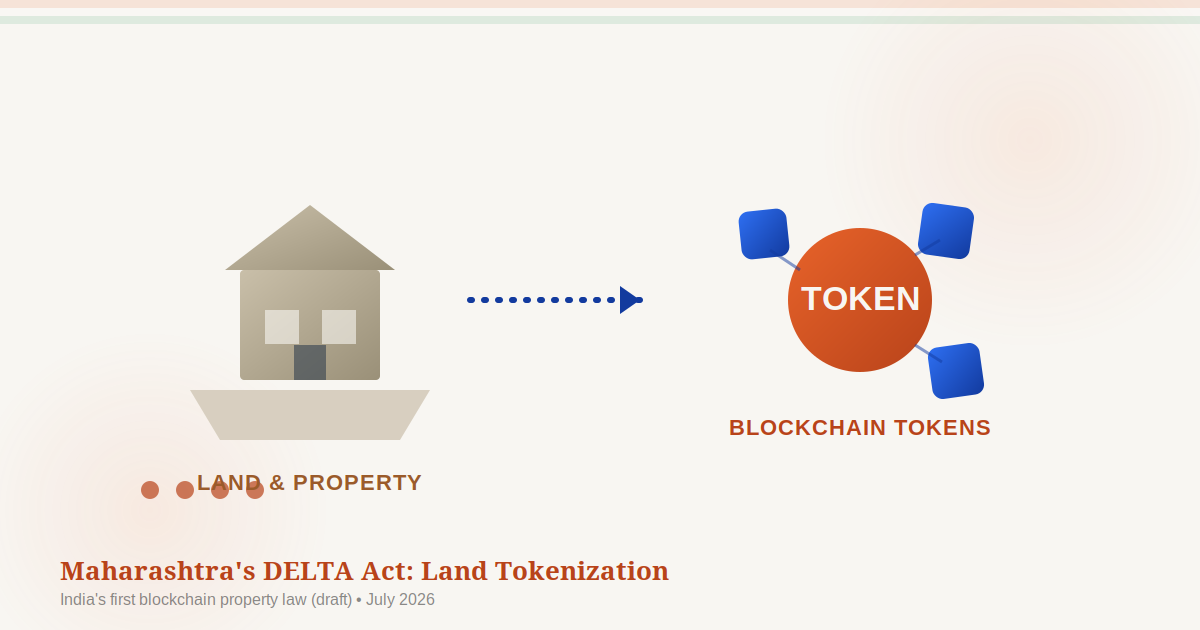
महाराष्ट्र सरकार भारत का पहला ब्लॉकचेन आधारित भूमि टोकनाइज़ेशन कानून — DELTA एक्ट — लाने की तैयारी में है। मुख्यमंत्री देवेंद्र फडणवीस ने इसका मसौदा तैयार करने का निर्देश दिया है। जानिए यह कानून प्रॉपर्टी लेनदेन को कैसे बदल सकता है।


EP 011 min.
EP 0224s
EP 0339sGet the top 5 crypto stories, market movers & expert analysis delivered to your inbox every morning.
CoinTulip Bharat (भारत)


CoinTulip France (France)


CoinTulip Germany (Deutschland)


CoinTulip Vietnam (Việt Nam)


CoinTulip China (中国)


CoinTulip Arabic (عربي)


CoinTulip Japan (日本)


CoinTulip Russia (Россия)


CoinTulip Israel (ישראל)


Trade on platforms trusted by millions — global & Indian exchanges.
The latest from crypto markets, blockchain technology, regulation and beyond.
महाराष्ट्र सरकार भारत का पहला ब्लॉकचेन आधारित भूमि टोकनाइज़ेशन कानून — DELTA एक्ट — लाने की तैयारी में है। मुख्यमंत्री देवेंद्र फडणवीस ने इसका मसौदा तैयार करने का निर्देश दिया है। जानिए यह कानून प्रॉपर्टी लेनदेन को कैसे बदल सकता है।
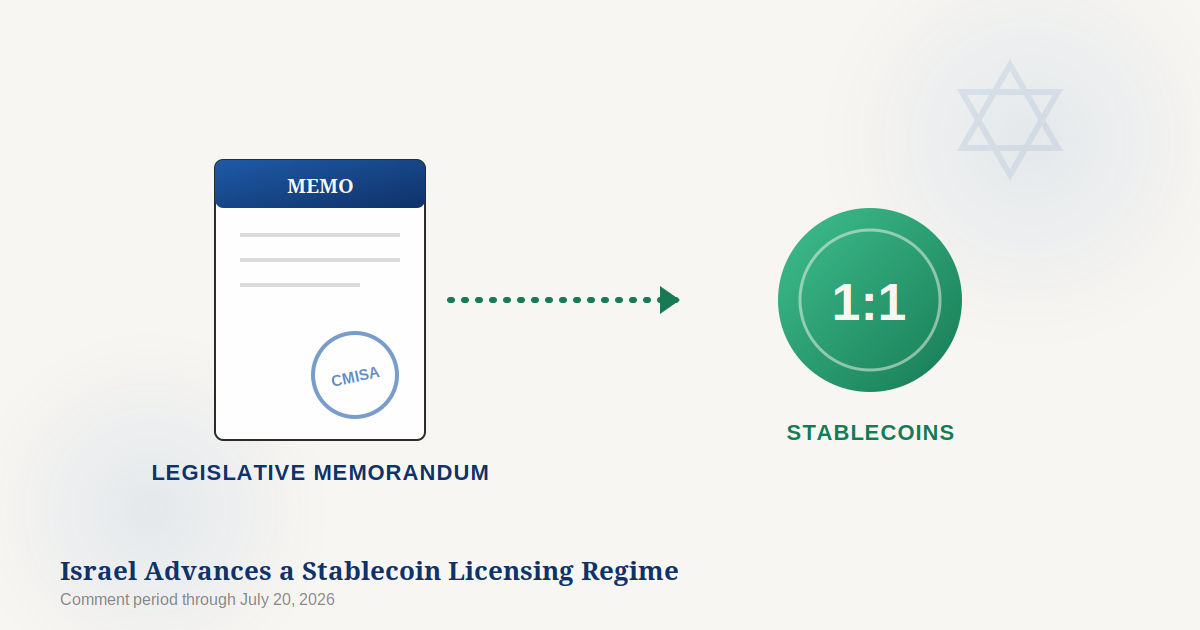
מעבר לתזכיר המטבעות היציבים, שנת 2026 הביאה עמה גל של פעילות ישראלית בתחום הנכסים הדיגיטליים, ובכלל זה אישור המטבע היציב הראשון המגובה בשקל, BILS, המשך מחקר השקל הדיגיטלי בבנק ישראל, וטענות התעשייה כי רפורמות עשויות להוסיף כ-38 מיליארד דולר לכלכלה.


Expert crypto analysis, daily briefings and price outlook from our research team.
Explores the existential threat quantum computing poses to blockchain security and how TRON's post-quantum cryptography deployment is the first major public blockchain response.
13 years ago today, Bitcoin quietly crossed $100 for the first time. That single moment turned a niche experiment into the global phenomenon it is today. Full story, crazy history & key lessons inside.
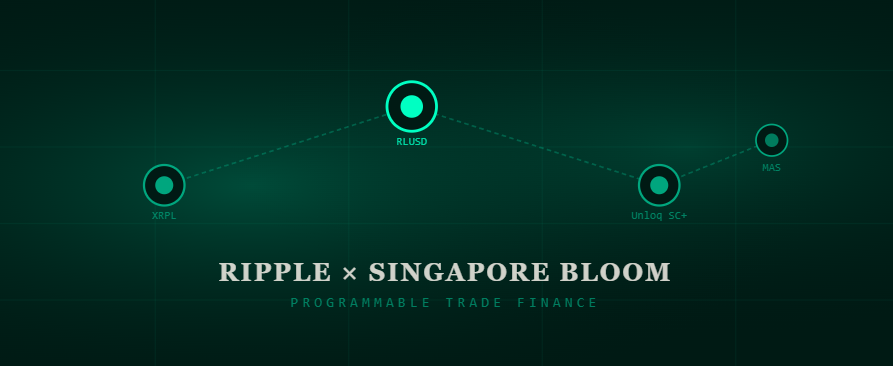
Ripple has joined Singapore's Monetary Authority of Singapore BLOOM initiative to test its RLUSD stablecoin in automated cross-border trade finance — partnering with supply chain fintech Unloq to trigger instant payments the moment shipment conditions are verified, potentially cutting settlement times from weeks to minutes.
Ripple is not a future promise — it is a present reality. No passport, no runway, no waiting. The future of global finance has already taken off.
CoinTulip's structural signal framework: the July 18 GENIUS Act deadline, the DTC tokenization pilot, ETH/BTC ratio at multi-year lows, altcoin season index at 48, and Bitcoin's -0.43 S&P 500 correlation — five non-price signals with major price implications for 2026.
CoinTulip Signals for March 20: BTC accumulation zone $68K–$70K with $80.7K target, ETH mean-reversion above $2,150 targeting $2,600, and SOL momentum play above $96 targeting $120 — with full entry, target, and invalidation levels for each setup.
CoinTulip's macro analysis: Bitcoin's correlation with the S&P 500 has turned negative at -0.43 as oil surges above $100 on Middle East tensions — with Strategy buying at $70,946 and BlackRock transfers confirming that major players are treating BTC as a geopolitical hedge, not a risk asset.
Deep-dive conversations with crypto founders, analysts and blockchain builders.
EP 011 min.
EP 0224s
EP 0339sData-driven signals from on-chain activity, technical analysis, and macro indicators — updated daily by the CoinTulip research team.
Long-term holders at record levels. SOPR trending positive for 3 weeks.
Score 42/100 — early BTC season. Watch ETH/BTC ratio for breakout.
Total DeFi TVL up 28% MoM. Ethereum leads but Solana gaining fast.
SSR at lowest since late 2024 — ample stablecoin fuel for next rally.
Consistent outflows suggest accumulation by large wallets.
Perpetual funding slightly negative — healthy, not overheated.
Franklin Templeton, one of the world's largest asset managers with $1.7 trillion AUM, has partnered with Ondo Finance to tokenize its ETFs and make them tradable 24/7 directly through crypto wallets — bypassing traditional brokerages and market hours entirely.
From first Bitcoin buy to DeFi pro — learn at your own pace.
Master blockchain fundamentals, DeFi protocols, and advanced cryptography concepts.
A beginner's complete guide to Ethereum: how smart contracts work, what the EVM is, why gas fees exist, how ETH differs from Bitcoin, how Layer 2 networks solve Ethereum's scaling challenge, and why Ethereum became the infrastructure backbone of DeFi, stablecoins, NFTs, and the tokenised financial system in 2026.
BeginnerA complete beginner's guide to Bitcoin: from Satoshi Nakamoto's 2008 whitepaper, to how the blockchain works, why the 21 million supply cap matters, how mining secures the network, and why Bitcoin is increasingly described as digital gold in 2026 — with the 20 millionth BTC mined in March.
BeginnerCountry-by-country guide to cryptocurrency regulation — click any card for the full breakdown.
CoinTulip's Singapore regulation report: MAS delays bank crypto capital rules to 2027, draft stablecoin legislation expected in 2026, tokenized government bill pilot with wholesale CBDC goes live, and Singapore's 2,000+ blockchain companies navigate a tightening compliance environment as competition from Hong Kong, Dubai, and the EU intensifies.
CoinTulip's USA regulation report: the SEC and CFTC's landmark March 17 joint crypto interpretation, the GENIUS Act's stablecoin framework, the CLARITY Act's path through Congress, and the July 18 implementation deadline — the most comprehensive crypto regulatory transformation in American history.
A blockchain is a chain of data blocks, each containing a batch of verified transactions. Every block is cryptographically linked to the one before it, making tampering with any historical record practically impossible. Once a block is confirmed, it cannot be altered without changing every block that follows — a task requiring more computational power than the entire network combined. Bitcoin was the first blockchain. Ethereum made blockchains programmable. In 2026, blockchains power everything from stablecoins to tokenized U.S. Treasury bills.
Created in 2009 by the pseudonymous Satoshi Nakamoto, Bitcoin is a peer-to-peer electronic cash system that operates without any central authority. Its supply is mathematically capped at 21 million coins — over 20 million have already been mined. Bitcoin uses a proof-of-work consensus mechanism where miners compete to add blocks and earn newly created BTC as rewards. Widely held as digital gold, Bitcoin is the first asset to be included in a U.S. Strategic Reserve and is increasingly described as a geopolitical hedge in institutional portfolios.
DeFi recreates traditional financial services on public blockchains using smart contracts. Decentralised exchanges like Uniswap allow anyone to swap tokens without a broker. Lending protocols like Aave allow anyone to lend or borrow without a credit check. Yield aggregators automatically move funds between protocols to maximise returns. Total DeFi TVL reached $130–140 billion in March 2026. The ecosystem processes billions of dollars daily, serves users in 180+ countries, and is increasingly processing institutional capital from regulated financial firms.
Every computation on Ethereum costs gas — units of computational work. The total fee equals gas used multiplied by the gas price, denominated in gwei (1 billionth of an ETH). Fees are higher when many users compete to transact simultaneously, because they are bid up in an auction for block space. The EIP-1559 upgrade in 2021 introduced a base fee that is burned, reducing ETH supply, plus an optional tip for validators. Layer 2 networks like Arbitrum and Base reduce gas fees to fractions of a cent by processing transactions off Ethereum's mainnet
Unlike fungible tokens where every unit is identical (one Bitcoin equals every other Bitcoin), an NFT is unique — each token has distinct properties and a specific owner recorded on the blockchain. NFTs use smart contracts to define ownership, enable transfers, and pay royalties to creators on secondary sales. They peaked in cultural visibility during 2021–2022, creating multibillion-dollar markets for digital art. In 2026, NFTs have evolved beyond collectibles into practical applications: property deed records, event tickets, intellectual property licenses, loyalty programs, and identity credentials. The SEC's token taxonomy formally classified NFTs as non-securities in March 2026.
A private key is a 256-bit number, typically displayed as a 64-character hexadecimal string. It is mathematically paired with a public key — your wallet address. The private key is used to create digital signatures on transactions, proving that the transaction was authorised by the address owner without revealing the key itself. Anyone with your private key has complete control of your funds. Modern wallets derive private keys from seed phrases so users never need to handle the key directly, but the underlying cryptography is what makes self-custody both secure and irreversible.
When you set up a crypto wallet, it generates a seed phrase: 12 or 24 randomly selected words in a specific order. This phrase is the mathematical root from which all your private keys are derived. It is the only backup that can recover your wallet if your device is lost or damaged. Write it down on paper, store it securely offline, and never share it with anyone. No legitimate service, exchange, or support team will ever ask for your seed phrase. Losing it means permanently losing access to your funds.
A smart contract is a program that lives on the blockchain and executes automatically when its conditions are satisfied. There is no human operator, no company that can refuse to honour it, and no business hours — it runs exactly as written, for anyone, at any time. Smart contracts power DeFi protocols, stablecoin systems, NFT marketplaces, prediction markets, and tokenized asset platforms. The term was coined by computer scientist Nick Szabo in 1994, decades before the technology to implement it existed.
Stablecoins solve crypto's volatility problem by pegging their value to a reference asset, most commonly the U.S. dollar. Fiat-backed stablecoins like USDC and USDT hold dollar reserves for every token in circulation. Algorithmic stablecoins attempt to maintain their peg through code-enforced supply adjustments. In 2026, the stablecoin market cap exceeded $308 billion, with over 232 million holders globally. The GENIUS Act established the first U.S. federal framework for stablecoin issuers, requiring one-to-one reserve backing and monthly disclosures.
A crypto wallet does not store coins — those live on the blockchain. It stores your private key: the unique cryptographic password that proves you have the right to move coins at a specific address. Hot wallets (MetaMask, Trust Wallet) are software-based and internet-connected — convenient but vulnerable to online attacks. Cold wallets (Ledger, Trezor) store keys on a physical device never connected to the internet — the most secure option for significant holdings. The cardinal rule: not your keys, not your coins.
Real-time prices, top gainers, losers and trending coins — powered by CoinGecko, updated regularly.


The Times Square of Crypto — your trusted home for real-time cryptocurrency news, live market data, and in-depth blockchain analysis.
To make cryptocurrency news accessible, accurate, and actionable for everyone — from first-time investors to institutional traders navigating a rapidly evolving digital asset landscape.
Readers from around the world follow CoinTulip for crypto and fintech news. Our team publishes regular stories on markets, technology, regulation, and the fintech ecosystem.
We maintain strict editorial independence. Sponsored content is clearly labeled. Our journalists follow a rigorous fact-checking process and always disclose conflicts of interest.
Real-time prices, market cap rankings, Market Sentiment Index, and global crypto stats are powered by CoinGecko API — updated regularly across all pages.
Subscribe to get our latest news and market updates in your inbox. No spam. Unsubscribe anytime.
Reach a global, crypto-native audience. Our readers are engaged, educated, and actively investing in digital assets.
Native content article published on CoinTulip, included in our homepage feed, newsletter, and social channels.
Your brand card featured in the Sponsored panel on our homepage hero section — seen by every visitor above the fold.
Your message reaches our engaged, crypto-native subscribers in the morning briefing email — high open rates, crypto-native audience.
Bespoke campaigns including multiple placements, co-branded content, social amplification, and dedicated analytics reporting.
Email us at advertise@cointulip.com or use our contact form.
Got a question, spotted an error, or want to grow with us? Your message is just one email away.
Choose the right email above and we'll get back to you as soon as possible.
Name: Vikram Singh
Designation: Director, CoinTulip
Email: grievance@cointulip.com
If you have a complaint about any content published on CoinTulip, please write to our Grievance Officer. We will acknowledge your complaint within 24 hours and resolve it within 15 days.
Last updated: 23 September 2026 · Effective: immediately
CoinTulip is the publishing brand of COINTULIP MEDIA PRIVATE LIMITED, a company incorporated in India ("we", "us", or "our"). We publish news and information at cointulip.com.
We determine the purpose and means of processing personal data on this site and related services. Under the Digital Personal Data Protection Act, 2023 that role is called the Data Fiduciary. We use the term so this policy stays consistent as the Act's operative provisions come into force.
The Government has brought the DPDP Act and the Digital Personal Data Protection Rules, 2025 into force in phases. Institutional and definitional provisions are already in force. Most substantive obligations and rights — including notice, consent, legitimate uses, security and breach duties, children's data rules, principal rights, and cross-border restrictions — are scheduled for the later commencement phase (18 months from the 13 November 2025 notification, expected from 13 May 2027). We follow this policy now, and we will comply with those provisions to the extent they apply and as they come into force.
We will never ask for your wallet seed phrase, private keys, banking passwords, OTPs, or card details. Anyone asking for these while claiming to be CoinTulip is not us.
We may collect the following personal data.
| Data | When it is collected | What it enables |
|---|---|---|
| Usage data — pages visited, time spent, clicks, browser type, device information, approximate location derived from IP address, and IP address | When you visit the site | Serving pages, security, diagnosing faults, and analytics |
| Newsletter data — email address | When you subscribe to CoinTulip Daily | Sending the newsletter you asked for |
| Contact data — name, email address, and message | When you email us or use a contact form | Replying to you |
| Cookie and similar identifiers | As described in section 5 | Site function, remembered settings, analytics, and advertising — depending on the cookie type |
| Market-related usage — ticker symbols or search terms you enter | When you use search or market tools on the site | Showing the market data you requested; limited logging for security and product improvement |
Live prices come from third-party services such as CoinGecko and Binance. Those services have their own privacy policies.
We do not collect wallet addresses, seed phrases, private keys, or payment-card data through this site.
We use personal data only for the purposes described here.
| Purpose | Data used | How we treat it today |
|---|---|---|
| Operate, secure, and fix the website, and show the page or market data you requested | Usage data; ticker / search terms | Needed to provide the site and tools you chose to use |
| Send CoinTulip Daily | Email address | Only if you opt in |
| Measure how the site is used, including through Google Analytics | Usage data; analytics cookies | Runs when you visit |
| Advertising tags (AdSense), if present; sponsored content on the site | Usage data; advertising cookies | AdSense tag may load; ads are not currently shown. Sponsored articles are labelled on the page |
| Remember settings such as theme | Preference cookies | To keep your setting, or as needed for the site to work |
| Respond to support, advertising, privacy, legal, and grievance requests | Contact data; relevant identifiers | Because you contacted us, or because we must handle the request |
| Keep records required by law and enforce our Terms of Use | Relevant records | Legal and operational records |
This table describes how we handle data today. As the DPDP Act's rules on consent and legitimate uses come into force, we will review our practices and update this policy to match.
We do not sell your personal data or our email list.
If you unsubscribe from the newsletter, we stop sending it. You can block analytics and advertising cookies in your browser, as described in section 5.
In line with the table above, we use personal data to:
The site uses cookies and similar technologies.
You can delete or block cookies through your browser settings. Some features may not work fully if you do so.
Google Analytics is a Google service. Data about how you use this site can be processed by Google as described in Google's Analytics privacy information. You can also use Google Ads Settings to limit personalised advertising across Google.
You can ask us to:
To make a request, email privacy@cointulip.com and include the email address or other identifier we would use to find your data (for example, the address used to subscribe).
You can unsubscribe from the newsletter using the link in any newsletter email.
When the DPDP Act's rights provisions come into force, those statutory rights — including access, correction, erasure, withdrawal of consent, nomination, and grievance redressal — will apply as written in the Act, and we will honour them. Until then, we handle the requests above as a matter of this policy.
If you are in the EEA, the United Kingdom, or California and those laws apply to you, you may have additional rights, such as data portability and the right to object to marketing. We do not sell personal information for money, although using advertising or analytics partners may count as "sharing" under some of those laws. This paragraph does not mean we are established in those places or that those statutes always apply.
We use service providers to run CoinTulip. They include:
Each has its own privacy policy. Some handle data only on our instructions. Some process data for their own purposes under their own policies. We remain responsible for personal data we ask a provider to handle for us.
Some of these providers are located outside India, so your data may be processed in other countries. The DPDP Act does not ban international transfers as a general rule. When section 16 and the related transfer rule come into force, the Central Government may restrict transfers to specified countries. We will not transfer personal data to a country or territory that is restricted under those provisions once they apply.
We keep personal data only as long as needed for the purposes described in this policy, or as required by law.
As a working guide:
When we no longer need the data for those purposes, we delete it and ask our providers to delete it, unless the law requires us to keep it.
We use reasonable technical and organisational measures to protect personal data, including access control, encrypted transport (HTTPS), backups, and vendor contracts. No website can be completely secure.
If a personal data incident occurs, we will investigate it, contain it, and inform affected people where that is appropriate. When the DPDP Act's breach-intimation duty and Rule 7 of the 2025 Rules come into force, we will also intimate the Data Protection Board of India without delay and give the Board the prescribed particulars within the then-applicable timeline (the Rules currently provide for detailed particulars within 72 hours of becoming aware, or any longer period the Board allows), and we will inform affected individuals as those provisions require. Until that duty is in force, the 72-hour Board timeline is a readiness target, not a currently operative statutory deadline.
CoinTulip is a general-audience website and is not directed specifically at children. We do not knowingly collect personal data from anyone under 18, and we do not use tracking or targeted advertising directed at children.
If you believe we have collected personal data from a person under 18, email privacy@cointulip.com and we will delete it.
The DPDP Act defines a child as a person under 18. The Act's specific rules on processing children's data are scheduled for the later commencement phase. The commitments in this section are our current practice, and we will follow those statutory rules when they come into force.
We may update this Privacy Policy from time to time. The latest version will always be on this page with a new "Last updated" date, and we will highlight significant changes on the site. Where a change requires a fresh opt-in, we will ask for it.
For privacy and data requests — including access, correction, deletion, unsubscribe, or nomination — email privacy@cointulip.com.
That mailbox is also the contact for questions about how we handle personal data.
If CoinTulip is treated as a publisher of news and current affairs content under Part III of the Information Technology (Intermediary Guidelines and Digital Media Ethics Code) Rules, 2021, complaints about published content follow that framework, not the DPDP Act.
Part III uses a three-tier structure:
Some parts of Part III, including the three-tier structure, are currently the subject of court proceedings. We still welcome content complaints and will handle them in good faith.
Grievance Officer (content)
Name: Vikram Singh
Designation: Director, COINTULIP MEDIA PRIVATE LIMITED
Email: grievance@cointulip.com
Write to this officer about content published on CoinTulip. We aim to acknowledge complaints within 24 hours and to reach a decision within 15 days. If you are not satisfied, you may take the matter to the next tier under the IT Rules.
Complaints about how we handle your personal data, or about a privacy request you sent to privacy@cointulip.com, should also go to:
Name: Vikram Singh
Designation: Director, COINTULIP MEDIA PRIVATE LIMITED
Email: grievance@cointulip.com
Please mark the subject as a personal-data grievance so we do not treat it as a content complaint.
We aim to acknowledge it promptly, usually within 24 hours, and to resolve it within 15 days. Some matters may take longer, and if so we will let you know. This is our internal process. When the DPDP Act's grievance and Board-complaint provisions come into force, you will also be able to complain to the Data Protection Board of India after using our mechanism, as those provisions require.
Last updated: 23 September 2026 · Effective: immediately
Please read carefully before using CoinTulip.
CoinTulip is the publishing brand of COINTULIP MEDIA PRIVATE LIMITED, a company incorporated in India ("we", "us", or "our"). These Terms of Use ("Terms") explain the rules for using cointulip.com and related pages (the "Site").
By using the Site, you agree to these Terms. If you do not agree, please do not use the Site.
How we handle personal data is explained in our Privacy Policy. Content complaints and personal-data grievances follow the process in that policy, including the Grievance Officer at grievance@cointulip.com.
CoinTulip publishes news, explainers, and market information about crypto, fintech, and related topics.
We are not a broker, exchange, wallet, custodian, or investment adviser. We do not run trades, hold crypto, or open accounts for you. We will never ask for your seed phrase, private keys, OTPs, banking passwords, or card details. Anyone asking for those while claiming to be CoinTulip is not us.
If you click through to an exchange, wallet, or other platform, you leave our Site. That platform's own terms and privacy policy apply there.
Everything on the Site — including articles, prices, charts, and research — is for information and learning only.
Nothing on the Site is financial, investment, legal, or tax advice. Nothing on the Site is an offer to buy or sell any asset. Crypto and other market products can go down as well as up, and you can lose money. Please do your own research. If you need advice, speak to a qualified professional who is allowed to advise you.
Please use the Site in a fair and lawful way. You agree not to:
You may open our pages, read them, and share links to our articles with credit to CoinTulip.
Articles, graphics, logos, charts, source code, and the way the Site is built belong to COINTULIP MEDIA PRIVATE LIMITED or to the partners who gave us permission to use them. They are protected by copyright and other laws.
You may not copy, republish, or reuse that material as your own without our written permission, except for ordinary sharing of links as set out above, or where the law allows.
Some articles and boxes are paid or partner content. We mark those with a "Sponsored" label.
Sponsored pieces are not our editorial voice. Our newsroom is not required to agree with a sponsor. Labelling a piece as sponsored does not mean we have checked the sponsor's product or that we recommend it.
Sponsored content about crypto products carries the disclaimer required by ASCI's guidelines for virtual digital asset advertising.
Live and delayed prices come from third parties such as CoinGecko and Binance. We show that data as we receive it.
Prices can be late, incomplete, or wrong. The Site does not promise that any figure is accurate or enough to trade on. Please do not make a money decision only because of a number on CoinTulip. If you do, that decision is yours.
The Site may link to other websites, including exchanges, wallets, research tools, and partner pages. We do not control those sites. We are not responsible for their content, safety, or privacy practices. A link is not a recommendation.
We try to keep the Site working, but we do not promise that it will always be up, error-free, or complete. We may change, pause, or take down parts of the Site when we need to.
To the extent Indian law allows, COINTULIP MEDIA PRIVATE LIMITED is not liable for loss of profit, loss of data, or other indirect or consequential loss that comes from using the Site or relying on something published here.
This does not try to exclude anything Indian law says we cannot exclude — including liability for fraud or for harm that the law does not let a company write away.
The Site and its content are provided as they are.
If you use the Site in a way that breaks these Terms, we may limit or stop your access. We may also take any other step the law allows.
These Terms are governed by the laws of India, without regard to conflict of law rules. If there is a dispute that has to go to court, it will be handled by the courts at [your city], India.
We may update these Terms from time to time. The new version will carry a new "Last updated" date on this page. If you keep using the Site after a change, that means you accept the updated Terms. Please look at this page now and then.
If any part of these Terms is found to be unenforceable, the rest still applies.
Questions about these Terms: grievance@cointulip.com
Privacy and data requests: privacy@cointulip.com